Wedding Toast vs Wedding Speech: What's Actually the Difference?
People use these terms interchangeably, but they're not the same thing. Here's what each is, when each is used, and how to write both.
Part of the Wedding Toast Guide : from 30 seconds to a full reception speech.
People use "toast" and "speech" as if they mean the same thing. They don't. Understanding the difference won't just help you write the right thing. It will help you write a better version of whichever one you're being asked to give.
The short version: a toast is short, raises glasses, and ends. A speech is longer, tells a story, and usually ends with a toast embedded in it. But the full picture is more useful than that.
The actual difference
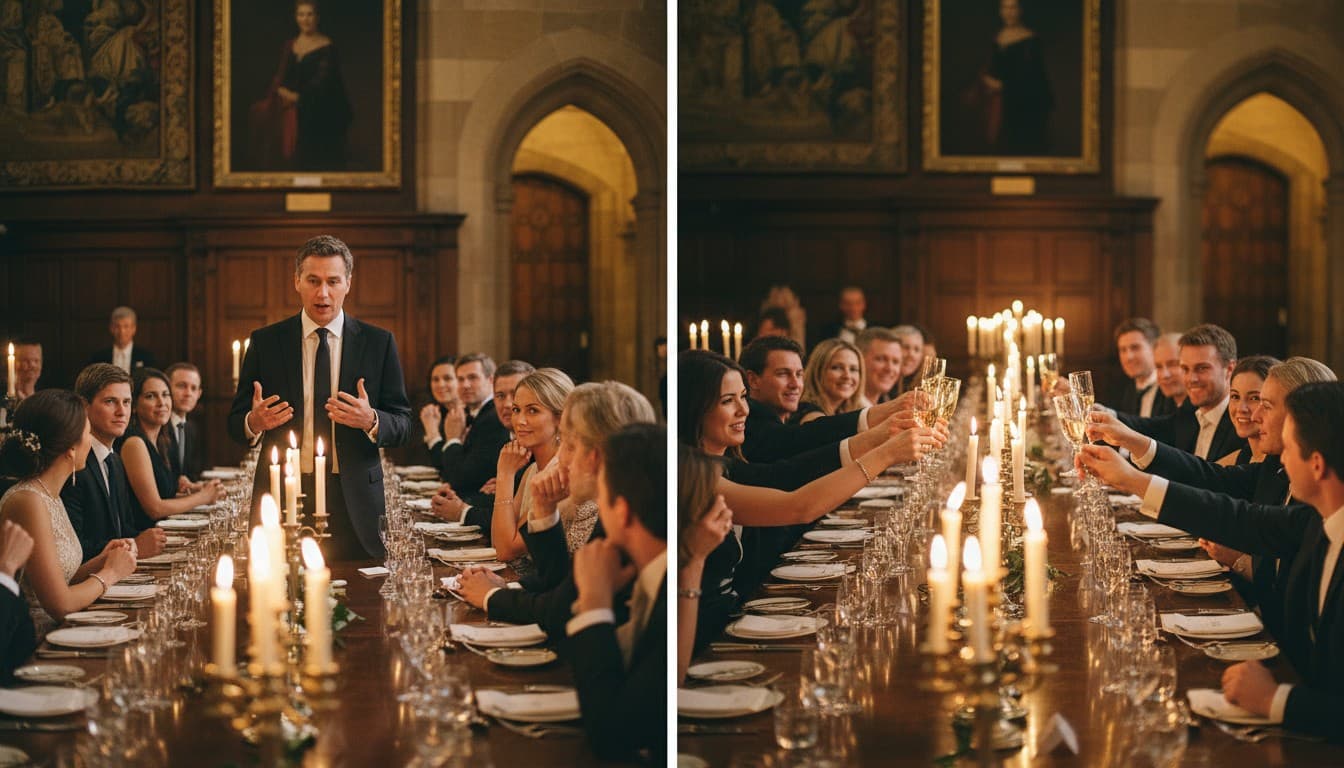
A toast is a short spoken tribute, typically 60 to 90 seconds, that concludes with the speaker inviting the room to raise their glasses. The raising of glasses is not decorative. It is the point. The words are the setup; the shared gesture is the close.
A speech is a longer narrative piece, typically 3 to 5 minutes, that builds through story, character, and emotion toward a meaningful close. Most speeches end with a toast, but the toast is a conclusion, not the whole structure.
The confusion is understandable. In common usage, people say "I have to give a toast" when they mean they have to give a speech. What they're usually doing is giving a speech that ends with a toast. That's the most common format at receptions, and it works well.
But if someone asks you for "a quick toast," they genuinely mean 60 to 90 seconds. If someone asks you to give a speech, they want the full arc.
When each is appropriate
At a typical wedding reception, here's how the timeline tends to work:
The welcome toast usually comes from a parent or the couple themselves, often before dinner. Short, warm, setting the tone. This is a true toast, 60 to 90 seconds.
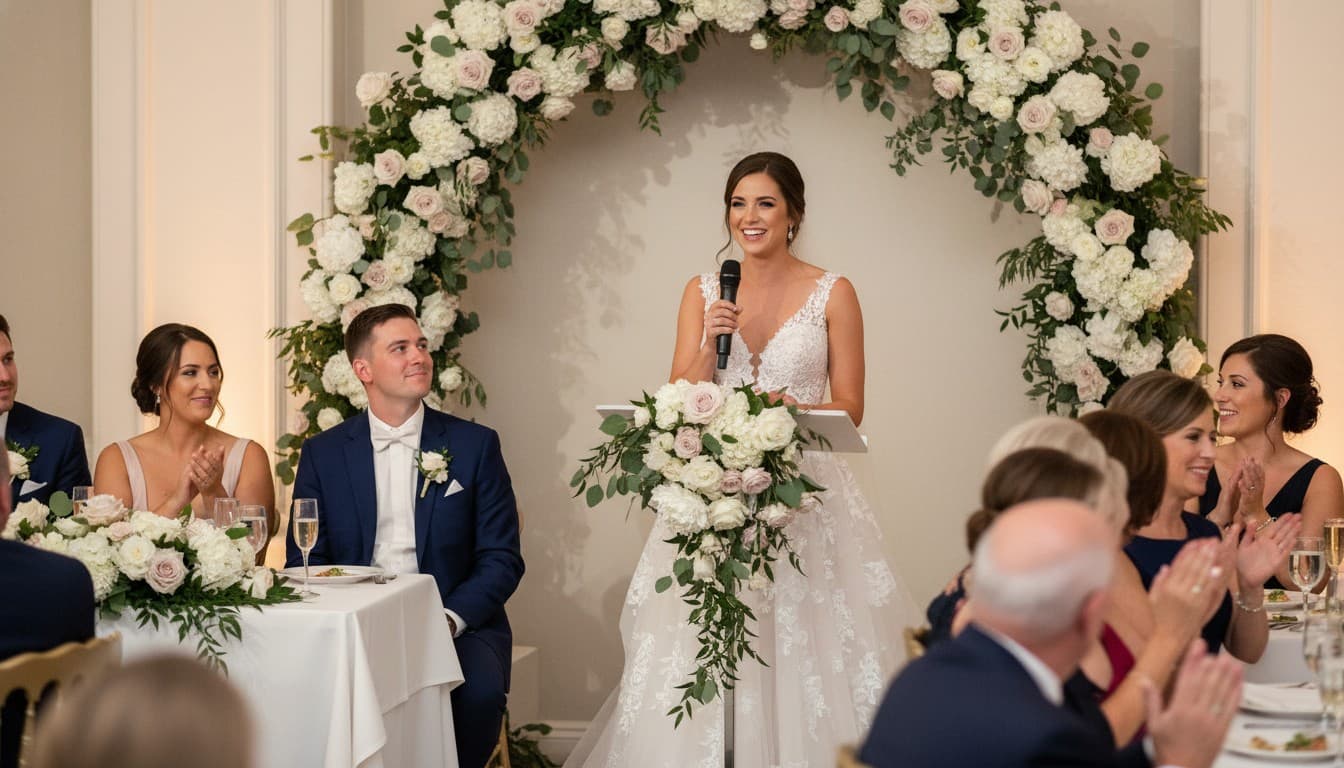
The main speeches come during or after dinner. Best man, maid of honor, parents. These are speeches. They take 3 to 5 minutes. They tell stories. They end with a toast.
The couple's toast (if the couple speaks) can be either, depending on how much they want to say.
If you're not sure which you're being asked for, ask the couple directly. "How long do you want me to speak?" is a perfectly reasonable question, and the answer will tell you everything.
The anatomy of a toast
A well-constructed toast has three parts and takes about 75 seconds to deliver.
The hook. One line that earns attention. It can be funny, warm, or striking, but it needs to land. "I have known her for thirty years and I still cannot explain how she got this lucky." That's a hook.
The one thing. A single observation, a brief specific moment, a quality you want to name. Not a list. One thing. "She is the kind of person who remembers the thing you mentioned once, six months ago, and follows up. That is who she is. And this man found her."
The toast line. Short. Specific. Directed at the couple. "To Jamie and Marcus, may every year be better than the last." Raise your glass. You're done.
The temptation is to add more. Don't. The restraint is part of its power.
The anatomy of a speech
A speech at a wedding has more room, which means it has more responsibility. The structure that works:
Opening. Establish who you are and why you're speaking. Not with a formal introduction, with a line that shows your relationship. "I've known her since we were both too young to know anything, which means I've watched her become this person from the beginning."
Story. One main story. Not a highlights reel. One story that reveals something true about who this person is. Specific. With a beginning, a middle, and a point.
Message. What you want them to carry into this marriage. What you see in them together. The thing you believe about them that you want said out loud in front of everyone.
Close with toast. End with a toast line that feels earned by everything that came before it.
That structure runs 3 to 5 minutes and leaves people feeling like they heard something real.
Can a speech be a toast?
Yes, and most great speeches are both.
The best speeches build a complete story and then close with a toast line that crystallizes everything into a single moment. The speech earns the toast. The toast lands harder because of the speech that preceded it.
The speech is the journey. The toast is where you arrive. You can hand someone the destination without the journey, and they'll receive it politely. But if you take them on the journey first, the destination means something.
Example: same content, two formats
Here is the same core idea written as a toast and as a speech, using a fictional speaker (Sam, maid of honor for Anna).
As a toast:
"Anna has always known exactly who she is. It took the rest of us a while to catch up. But watching her with Daniel over these past three years, I've seen something I didn't expect: she became even more herself. To Anna and Daniel, may you always bring out the best in each other."
That's 75 seconds. It works. It's a true toast.
As a speech:
"I met Anna in the first week of university. She had a plan, a backup plan, and an opinion about both. I did not know then that she would become my closest friend, but looking back, it was never really a question.
For fifteen years I watched her move through the world with this particular combination of certainty and warmth. She is the person who calls you back. She is the person who says the true thing when everyone else is avoiding it.
And then she met Daniel.
What I noticed first wasn't that she was happy, though she was. What I noticed was that she got quieter. In the best way. She stopped performing and started just being. I don't know how he did that. I don't think either of them do. But I've watched it happen over three years and I believe it completely.
To Anna and Daniel. May you always bring out the best in each other. You already do."
That's about three minutes. It earns the toast at the end in a way the 75-second version simply doesn't have room for.
Both are right. The question is which one you've been asked to give.
Keep reading:
- A Short Wedding Toast That Lands Every Time
- How to Start a Wedding Toast
- How Long Should a Wedding Speech Be?
When you know what you're writing, writing it gets easier.
SpokenVow asks the right questions, then builds the speech or toast that fits your role, your relationship, and the time you've been given. No templates. Just yours.