Short Wedding Speeches: 10 Examples Under 3 Minutes
Short does not mean shallow. Here are 10 short wedding speech examples across every role, with notes on why each one works in under three minutes.
See also: How Long Should a Wedding Speech Be? and The Three-Minute Wedding Speech
Most wedding speeches are too long. Not because the speaker has too much to say, but because they do not trust that a short speech can carry real weight. It can. Some of the best speeches at any wedding are the ones that take two minutes and sit down.
Here are 10 short speech examples across different roles, each under three minutes when spoken at a natural pace. Every one of them does something specific, says something true, and ends before the room has a chance to drift.
Why short speeches work
A three-minute speech is roughly 400 words. That is enough for one story, one observation about the couple, and a toast. It is not enough for a biography, a timeline, or a list of inside jokes. That constraint is the whole advantage.
Short speeches force you to choose. What is the one thing you want this room to remember? Say that. Cut everything else. The room will thank you.
Best man (short version)
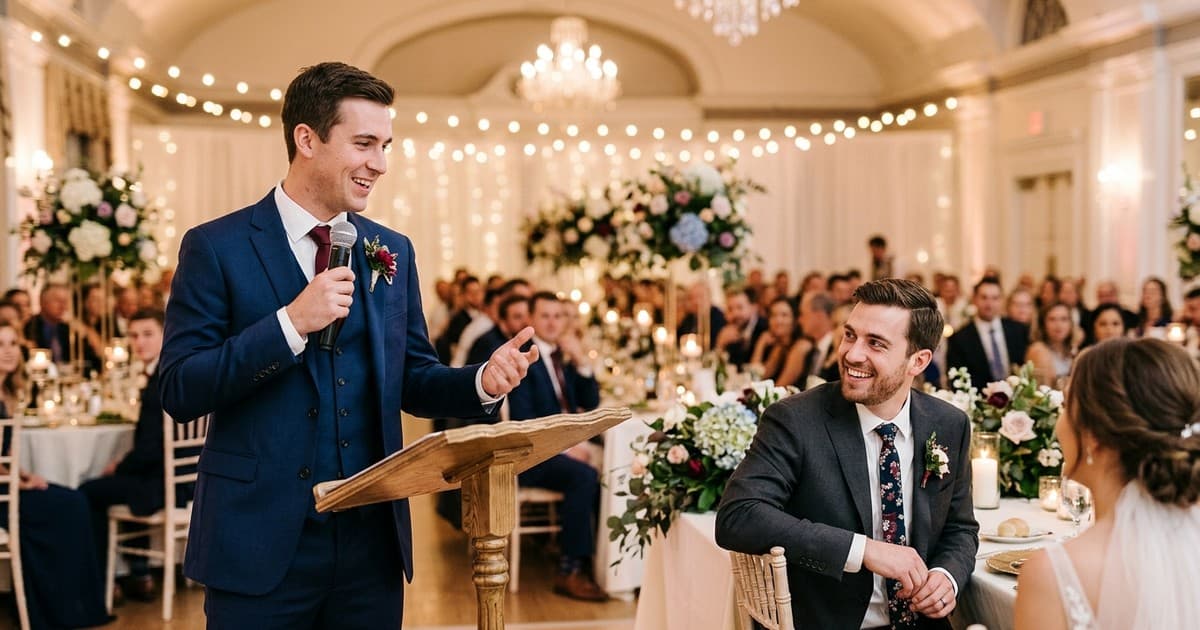
I have known [groom] for twelve years. In that time I have watched him do a lot of questionable things. Buying that car. The beard phase. Moving to Portland.
But I have never once questioned this. From the first time he talked about [bride], he was different. Calmer. More sure. Like something had clicked into place that he did not even know was missing.
[Bride], you did that. And I am grateful.
To [bride] and [groom].
Why it works: Three quick jokes establish the relationship, then one honest pivot carries the weight. Under two minutes.
Maid of honor (short version)
[Bride] called me the night she met [groom]. She said, "I think I met someone." She never says that. She once dated a man for four months and told me about it on the way to the airport.
So when she said those words, I listened. And when I met [groom], I understood why.
To the two of you. I knew before you did.
Why it works: One specific detail (the phone call) does more than ten minutes of backstory. The "I knew before you did" line gives the room something to hold onto.
Father of the bride (short version)
I have been thinking about what to say for weeks. I wrote something long. Then I crossed most of it out.
Here is what I kept: [Bride], your mother and I have watched you become someone extraordinary. And [groom], the way you look at her is the same way I still look at her mother, and that tells me everything I need to know.
To our daughter, and to the man she chose.
Why it works: The "crossed most of it out" opening is honest and instantly relatable. The parallel between how the groom looks at the bride and how the father looks at the mother is a single image that fills the room.
Mother of the bride (short version)
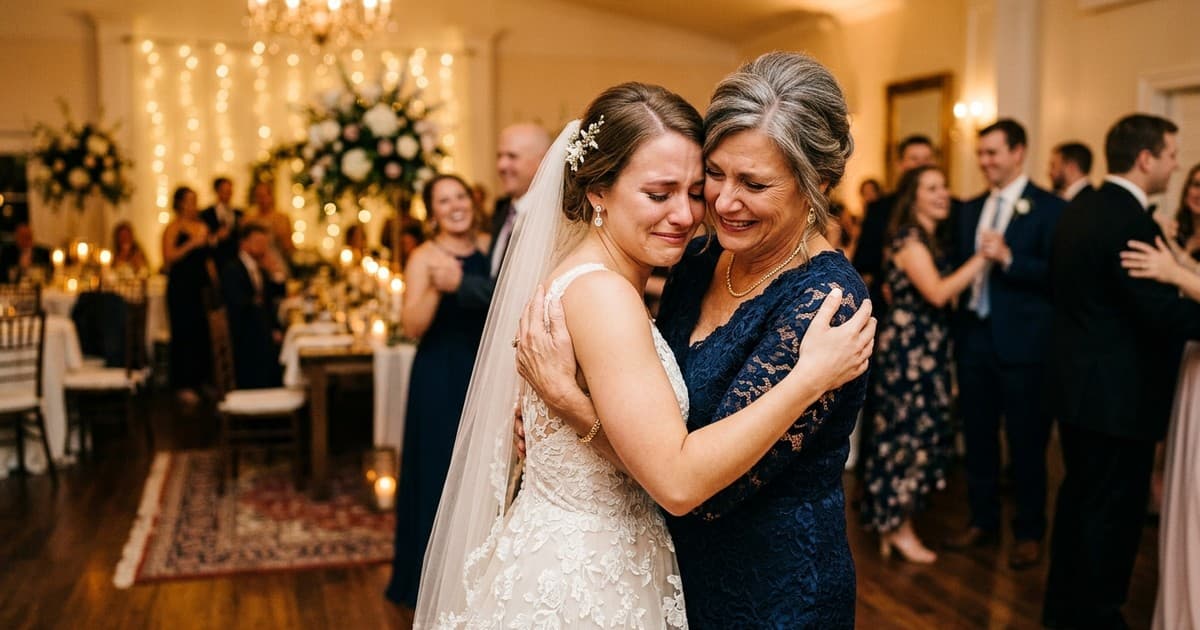
I told myself I would not cry. I think we all know how that is going.
[Bride], you have always known your own mind. Even when you were small, you would decide something and that was the end of the discussion. When you told me about [groom], I saw that same certainty. No hesitation. No second-guessing.
[Groom], welcome to our family. She chose you, and she does not choose lightly.
To our girl, and to the life you are building together.
Why it works: The opening line about crying gets the room on her side immediately. The "she does not choose lightly" line is a compliment to both the bride and the groom at the same time.
Groom (short version)
I want to thank everyone for being here. Especially [bride's parents], who raised the person I get to spend my life with.
[Bride], I am not going to try to say something perfect. I am just going to say what is true: you make me better. Not in some abstract way. In the real, daily, Tuesday-morning way. And I will spend the rest of my life trying to return the favor.
To my wife.
Why it works: "Tuesday-morning" grounds the sentiment in something real. "To my wife" is two words and the strongest close a groom can deliver.
Bride (short version)
I did not plan on giving a speech. But I am standing here looking at all of you, and I need to say something.
[Groom], I love the version of myself I am when I am with you. That is not something I have ever been able to say about anyone. And to everyone in this room, thank you for being part of the story that brought us here.
To all of you. And to us.
Why it works: The unplanned framing makes it feel immediate. The line about "the version of myself" is specific without being sentimental.
Friend of the couple (short version)
I do not have a formal role tonight, so I will keep this short.
I have watched these two from the beginning. The first date recap. The first argument recap. The night [groom] called me and said, "I think she is the one," and I said, "I know."
To [bride] and [groom]. Your people are very happy tonight.
Why it works: "Your people are very happy tonight" is a line that makes the whole room feel included.
Sibling (short version)
Growing up with [name] was exactly what you would expect. We fought over everything. The remote. The front seat. Who got the last piece of pizza.
But we never fought about the important stuff. And [partner's name], you are the most important stuff there is.
To my [brother/sister] and the person who makes [him/her] ridiculous happy.
Why it works: The pizza detail is small and real. The pivot from "we fought about everything" to "you are the most important stuff" does the emotional work in one turn.
Parent of the groom (short version)
[Groom], your mother and I are proud of you. Not because of today, although today is something. But because of who you have become, and who you chose to become it with.
[Bride], thank you for loving our son. We already love you back.
To the newlyweds.
Why it works: "Not because of today" is a subtle reframe that gives the compliment more depth. The "we already love you back" is warm without being corny.
Open floor toast (30 seconds)
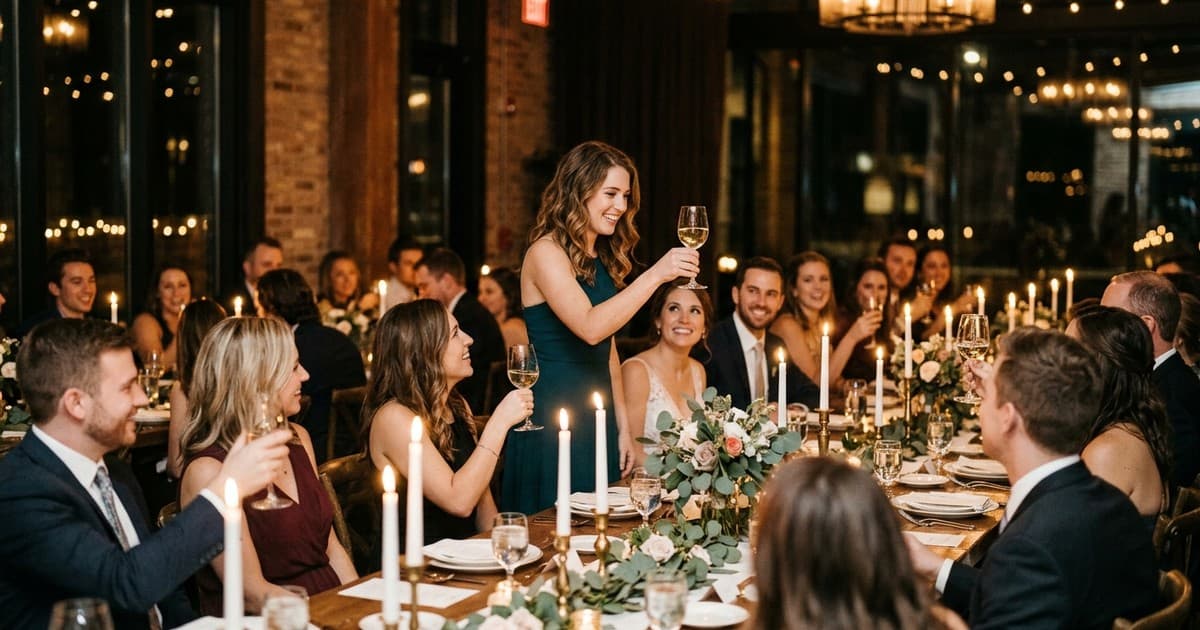
I just want to say one thing. I have been to a lot of weddings. This is the first one where I looked at the couple and thought, okay, they actually get it. To [bride] and [groom].
Why it works: Twenty seconds. No story needed. One observation, delivered with confidence, is all an open floor toast requires.
Tips for keeping it short
- Write it out, then cut it in half. Your first draft is always too long. Cut the setup. Cut the second story. Cut the transition. What remains is the speech.
- One story maximum. If you have two stories, pick the better one. Save the other for the bar later.
- Time it out loud. Read your speech at speaking pace with pauses. If it is over three minutes, cut more.
- End on the strongest line. Find the best sentence in your speech and make it the last one. Delete everything after it.
For more on managing length, see How Long Should a Wedding Speech Be? or The Three-Minute Wedding Speech.
Need help writing a short speech?
SpokenVow specializes in speeches that are tight, personal, and the right length. The interview pulls out the one story that matters, and the drafts come back ready to deliver.